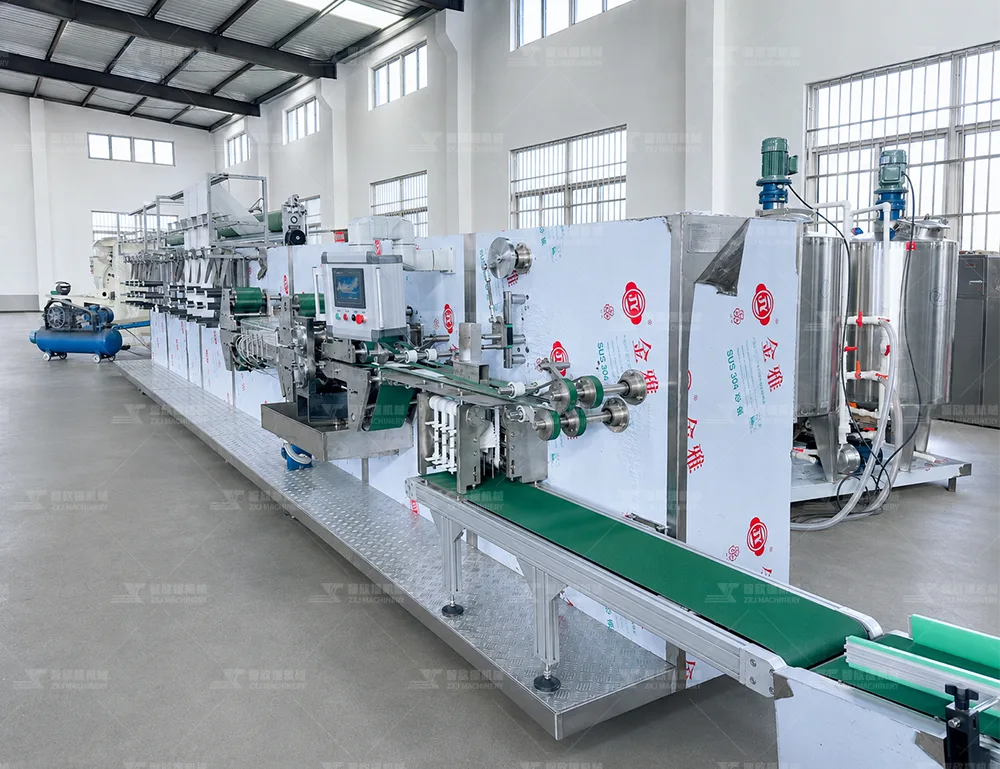
The ZXJ 12-lane production line lists baby wipes, kitchen wipes, and antibacterial wipes all as applicable products. That’s not a marketing stretch—it’s genuinely one platform. But “same machine” doesn’t mean “same setup.” The differences between baby wipes and household wipes are real, and getting the configuration wrong affects product quality, shelf-life, and whether you pass regulatory scrutiny in your target market.
Here’s where the configuration actually diverges.
1.Fabric: It’s Not Just Weight—It’s Fiber Composition
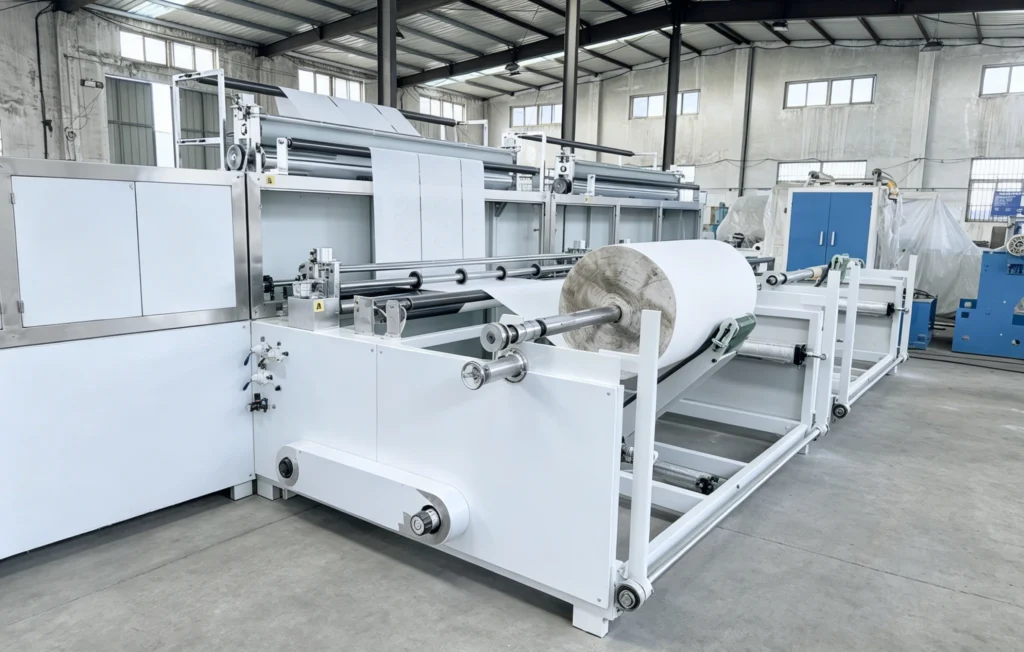
The folding machine handles 35–80g spunlace and hot-air non-woven fabric across the full range.
Product Type | Typical GSM | Fiber Blend | Priority |
Baby wipes | 40–50g | 100% viscose or 70/30 viscose-polyester | Softness, hypoallergenic, skin-safe |
Facial / personal care | 40–60g | Viscose-heavy blend | Smooth finish, low lint |
Standard household | 55–70g | 50/50 viscose-polyester | Balance of softness and durability |
Kitchen / antibacterial | 65–90g | Polyester-heavy or bicomponent | Wet strength, scrub resistance |
The practical implication for machine setup: lighter, softer baby wipe fabric (40–50g viscose-heavy) is more prone to tearing under excessive tension than heavier household fabric. The machine’s pneumatic-assisted feeding and tension adjustment control system allows operators to set tension per material type—this adjustment is essential when switching between product categories, not optional.
2.Liquid Formulation: The Biggest Difference Between the Two
This is where baby and household wipes diverge most fundamentally—and where misconfiguration carries the most risk.
Baby wipe formulas are built around minimal skin irritation. A published review in PubMed (2024) describes modern baby wipe formulations as designed around “infant skin health, containing a gentle cleanser, suitable emollient, and buffer system enabling a slightly acidic pH value, and free of ethyl alcohol.” In practice this means: predominantly purified or deionized water (typically 90–95%), mild amphoteric surfactants (not stripping detergents), humectants like glycerin, and low-concentration preservatives. No alcohol. pH typically 4.5–6.0 to match infant skin’s natural acidity.
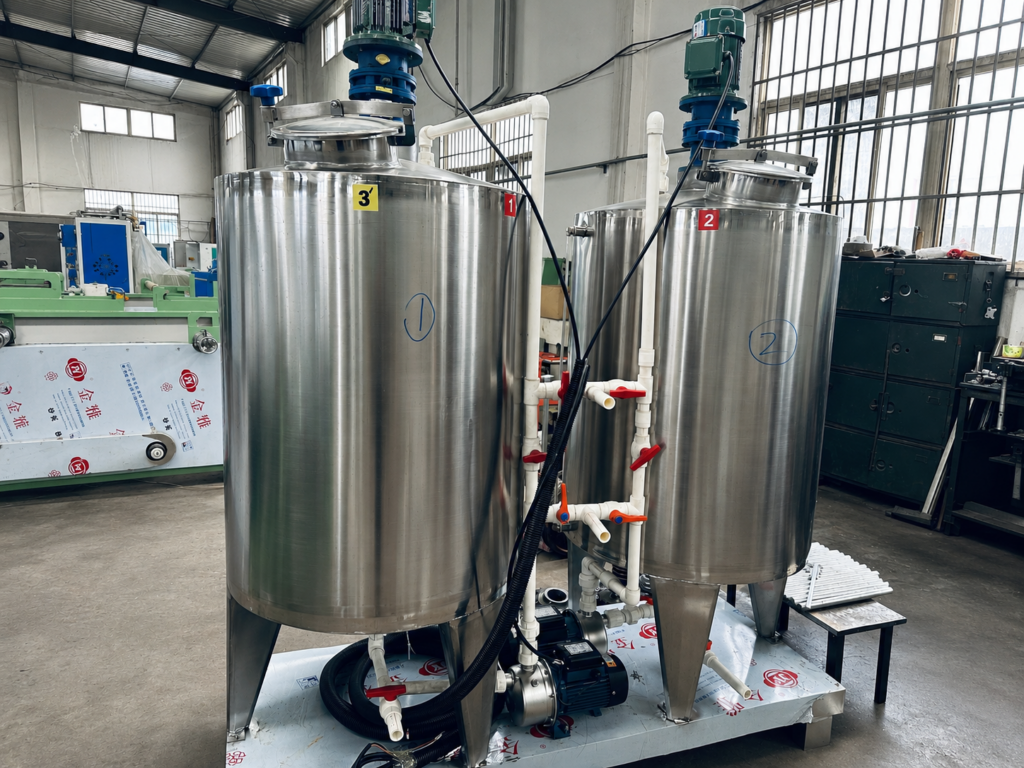
Household and antibacterial wipe formulas use fundamentally different active ingredients: alcohol (typically 60–75% IPA for antibacterial claims), quaternary ammonium compounds, or chlorhexidine for disinfection. These are the formulations that make the 316 stainless steel liquid tank a meaningful specification—standard 304 steel corrodes under prolonged exposure to alcohol and chloride-based solutions.
Formulation | Water Content | Active Ingredient | Tank Requirement | |
Baby wipes | 90–95% | Mild surfactant, glycerin, no alcohol | 316 SS; clean dosing circuit essential | |
Facial / cosmetic | 80–90% | Aloe, vitamin E, mild preservative | 316 SS; nozzle compatibility check for viscous formulas | |
Antibacterial wipes | Variable | 60–75% IPA or quaternary ammonium | 316 SS required | |
Disinfectant / clinical | Variable | Chlorhexidine, hypochlorite | 316 SS required; nozzle material verification | |
Kitchen / household | 70–85% | Surfactant + fragrance or mild degreaser |
|
One operational point that matters for multi-product lines: switching from a baby wipe formula to an antibacterial or household formula—or back—requires a full cleaning cycle of the liquid circuit before the next run. Cross-contamination between a mild baby formula and an alcohol-based antibacterial formula is a real quality risk. This cleaning time needs to be built into production scheduling.
3.Regulatory Classification: Baby Wipes Face a Stricter Compliance Path
This is the dimension most production managers underestimate before their first export order gets flagged.
In the US: The FDA classifies baby wipes as cosmetics under the FD&C Act. Pre-market approval isn’t required, but manufacturers must ensure product safety, follow GMP, and—under the Modernization of Cosmetics Regulation Act (MoCRA)—register manufacturing facilities and list products with the FDA. Claims like “hypoallergenic” or “dermatologist-tested” must be substantiated. Antiseptic or antimicrobial claims trigger separate EPA or FDA drug-track review. (Sources: FDA, Nonwovens Industry, phoenixwipes.com)
In the EU: Baby wipes fall under EU Cosmetics Regulation (EC) No 1223/2009. Wipes with antibacterial claims may additionally fall under the Biocidal Products Regulation (BPR), which requires pre-authorization of active ingredients. (Sources: droidwipes.com, grand-packing.com)
Key certifications buyers and their retail partners commonly require:
| Certification | Relevance |
|---|---|
| OEKO-TEX Standard 100 Class I | Fabric safety for products contacting infant skin |
| ISO 22716 | GMP for cosmetics manufacturing |
| ISO 9001 | Quality management system |
| Dermatological testing | “Hypoallergenic” / “dermatologist-tested” label claims |
The machine itself—SUS304 contact surfaces, 316 SS liquid tank, medical-grade cleanliness—provides the manufacturing documentation foundation for either compliance track.
4.Film Type: Different Shelf-Life Requirements Drive Different Choices
4. Film Type: Different Shelf-Life Requirements Drive Different Choices
The packaging machine (YWJ-QS-F600W) is compatible with BOPP/PE, CPP/PE, CPP/PA, OPP, and CPP anti-fouling films at 5–8μm.ho built the machine is reachable. Different product types typically need different barrier properties:
Product | Typical Film | Reason |
Baby wipes | CPP/PE or CPP/PA | CPP offers better heat-seal integrity; PA layer adds oxygen barrier for longer shelf-life |
Household wipes | BOPP/PE | Cost-effective moisture barrier; adequate for shorter shelf-life |
Antibacterial wipes | CPP/PA | Oxygen barrier preserves active ingredient efficacy over shelf life |
Kitchen wipes | BOPP/PE or CPP anti-fouling | Anti-fouling finish relevant for humid kitchen environments |
Cosmetic wipes | CPP/PE | Soft-touch feel aligns with premium positioning |
5.Folding Method and Pack Count: Driven by the End Consumer
Check | What to Ask | What to Look For |
Factory visit | "Can we visit your production facility?" | Real workshop with machines in assembly, not a showroom |
Engineer access | "Can we speak with the engineer who will build our line?" | Direct technical conversation, not a sales intermediary |
Customization | "Can you modify the frame footprint for our floor plan?" | Specific answer with lead time, not a generic yes |
Documentation | "Will electrical schematics and PLC documentation be in English?" | Confirmed as a deliverable, in writing |
Spare parts | "What is the lead time for a replacement servo drive?" | Days, not "we'll check with the factory" |
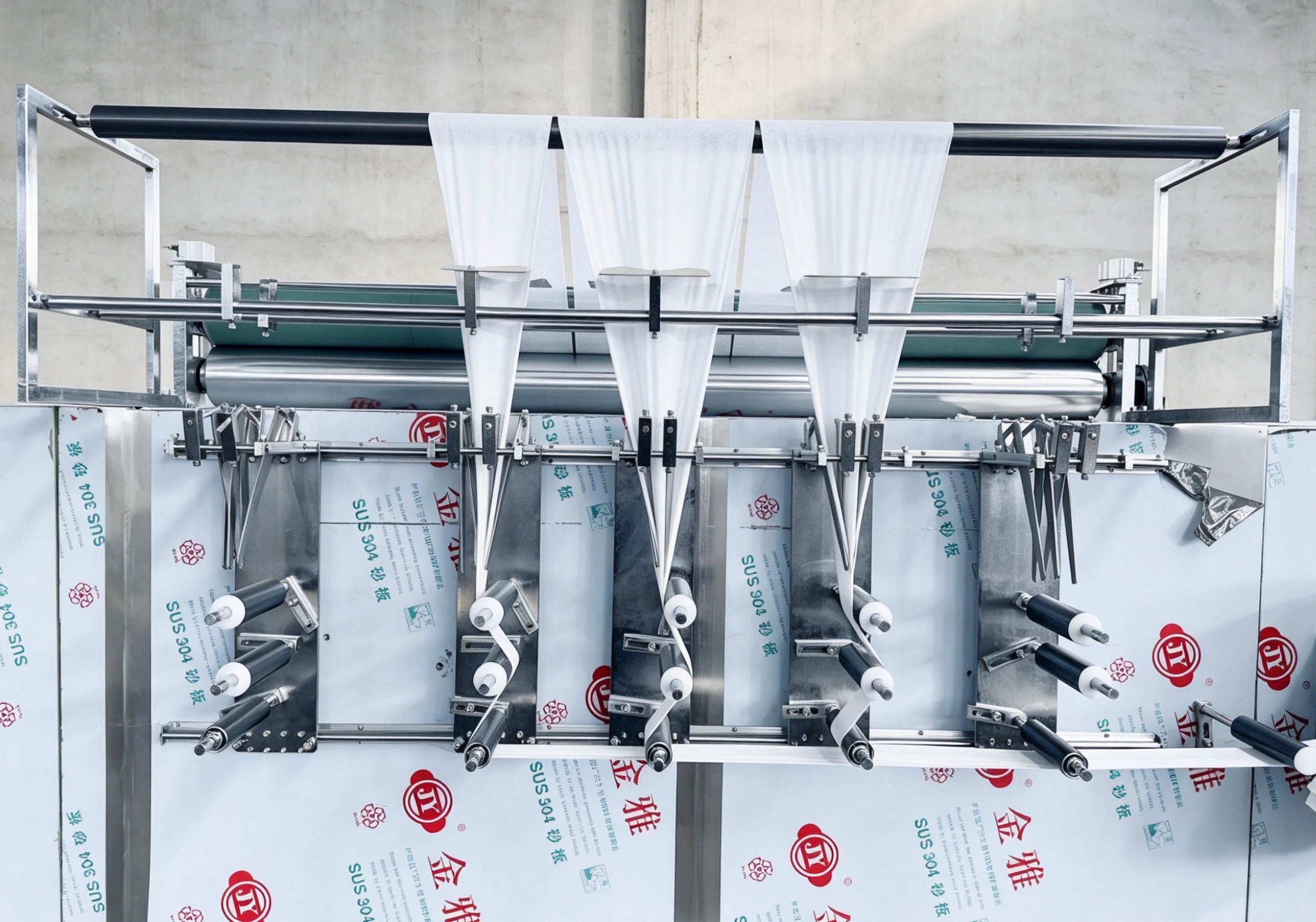
The folding machine supports both half-fold and N-fold. The capping machine covers 30–120 pcs/pack with one-click parameter switching.
In practice:
- Baby wipes: most commonly 60–80 pcs, half-fold, resealable pack with flip-cap
- Travel baby wipes: 20–30 pcs, smaller footprint for diaper bag use
- Household cleaning: 40–60 pcs, half-fold; some kitchen formats use N-fold for single-sheet dispensing
- Premium personal care / facial: 25–30 pcs, sometimes N-fold for pop-up dispensing
Format changes within this range require one-click parameter input—no tooling swaps—making it practical to run different SKUs on the same line across shifts or days.
Conclusion
Baby wipes and household wipes share the same production platform. What differs is configuration: fabric tension settings, liquid formulation and dosing, film selection, and the compliance documentation trail your product requires. Getting those four variables right is what separates a line that passes an audit from one that doesn’t—regardless of which machine you’re running.
Download the Full Production Line Catalog →
Request a Configuration Consultation →
FAQ
Q: Can one wet wipes machine produce both baby wipes and household wipes?
- A: Yes. The ZXJ 12-lane line supports both product types. The key operational requirements are: tension recalibration per fabric spec, full liquid circuit cleaning between formulations, and film roll changeover.
Q: What GSM fabric is used for baby wipes?
- A: Industry practice for baby wipes is typically 40–50g in 100% viscose or 70/30 viscose-polyester blends—softer and more skin-safe than the heavier fabrics used for household or industrial wipes.
Q: Do baby wipes need FDA approval?
- A: The FDA classifies baby wipes as cosmetics. Pre-market approval isn’t required, but manufacturers must ensure product safety, follow GMP, and register their facility and products with the FDA under MoCRA. Antibacterial or antiseptic claims trigger a separate regulatory review.
Q:Why does the liquid tank use 316 stainless steel instead of 304?
- A: 316 SS contains molybdenum, which provides better corrosion resistance against alcohol-based, chloride-based, and disinfectant formulations. For baby wipe formulas (predominantly water-based), the difference is less critical—but for antibacterial or kitchen wipe production on the same tank, 316 SS is the right specification.
Ready to Start the Evaluation?
📩 Get a Quote / Contact Us
ZXJ Machinery manufactures wet wipes production lines from 4-lane to 20-lane configurations, with direct factory access, full English documentation, and pre-shipment video testing as standard.
WhatsApp: +86 158-9610-9075
Email: paul@zxjmachinery.com
For detailed specifications and model options, visit our