
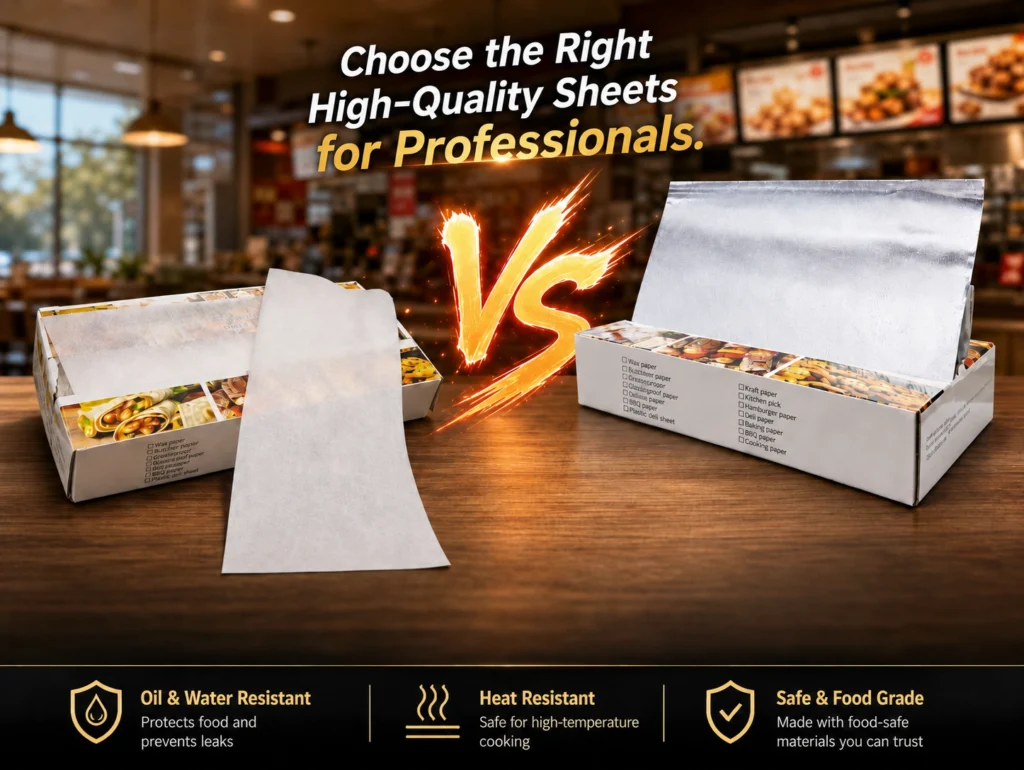
Quick-service restaurants, delis, and bakeries routinely choose between deli paper and aluminum foil for wrapping food to go — and many suppliers offer both, since the right choice depends on the product being wrapped rather than one material being universally better. This guide compares the two on the factors that actually drive a foodservice packaging buyer’s decision, then looks at how the folding equipment for each material differs.
What Buyers Need to Compare Deli Paper vs Aluminum Foil On
Before choosing between deli paper and aluminum foil, it helps to separate the decision into a few practical factors: how much grease or moisture the wrap needs to block, whether the food needs to stay hot (or go from freezer to oven), whether the wrap needs to carry printed branding, cost per sheet, and how the packaging fits a sustainability positioning. The two materials perform very differently across these factors, which is why many suppliers carry both rather than picking one.
Deli Paper: Grease Resistance, Printability, and Sustainability
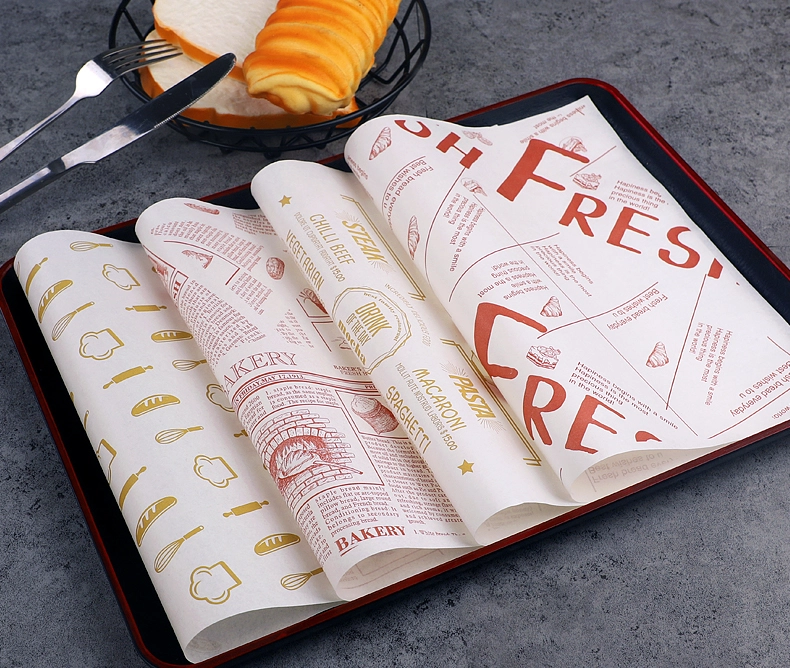
Deli paper — also called greaseproof paper — comes in a few distinct types. Some are physically dense papers with no coating, relying on tightly packed fibers to resist oil penetration. Others are chemically treated, either with traditional fluorochemical sizing agents (strong grease resistance, but increasingly restricted due to PFAS regulations) or with newer fluorine-free alternatives based on bio-based, acrylic, or CMC formulations that are compostable and better suited to current packaging regulations. A separate category, silicone-coated paper, adds a non-stick coating that’s well suited to baked goods but is harder to print on than uncoated grades.
Grease Resistance Ratings for Deli Paper
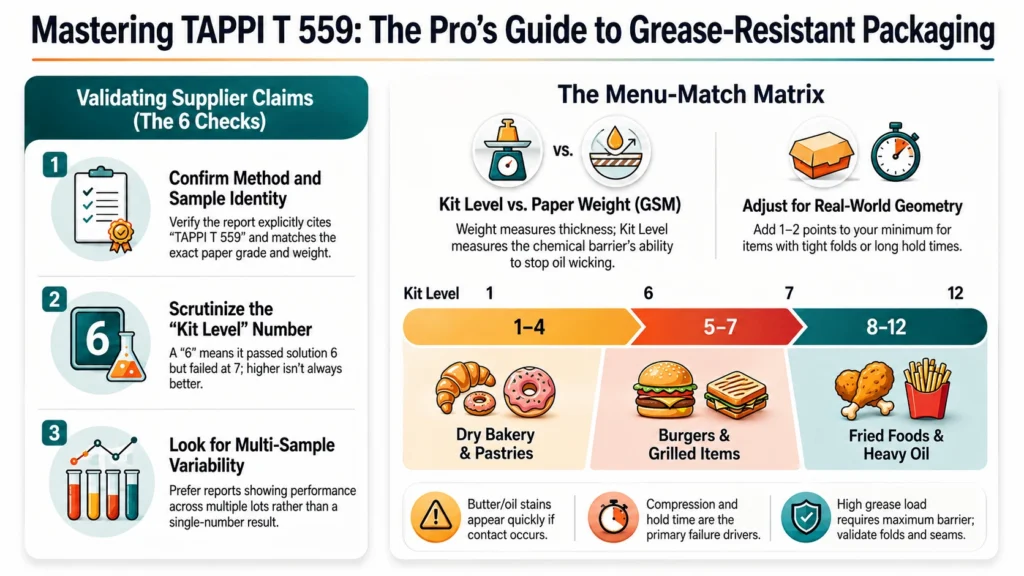
The paper industry rates grease resistance using the Kit Test (TAPPI UM 557, later expanded as T 559), which scores paper from 1 to 12 based on how well it resists a series of increasingly aggressive oil and solvent mixtures. Lower ratings (roughly 1–3) suit low-oil items like bread or crackers; mid-range ratings (4–7) suit burgers and sandwiches; high ratings (8–12) are used for deep-fried items like fried chicken or popcorn. This rating is worth knowing when evaluating deli paper suppliers, since it’s a standardized way to compare grease performance across different paper grades.
What deli paper doesn’t do is provide a complete barrier — it resists grease and moisture to a degree defined by its Kit rating, but it isn’t a true barrier the way a metal layer is, and it isn’t designed for freezer-to-oven temperature swings.
Aluminum Foil: Heat Retention and Complete Barrier Protection
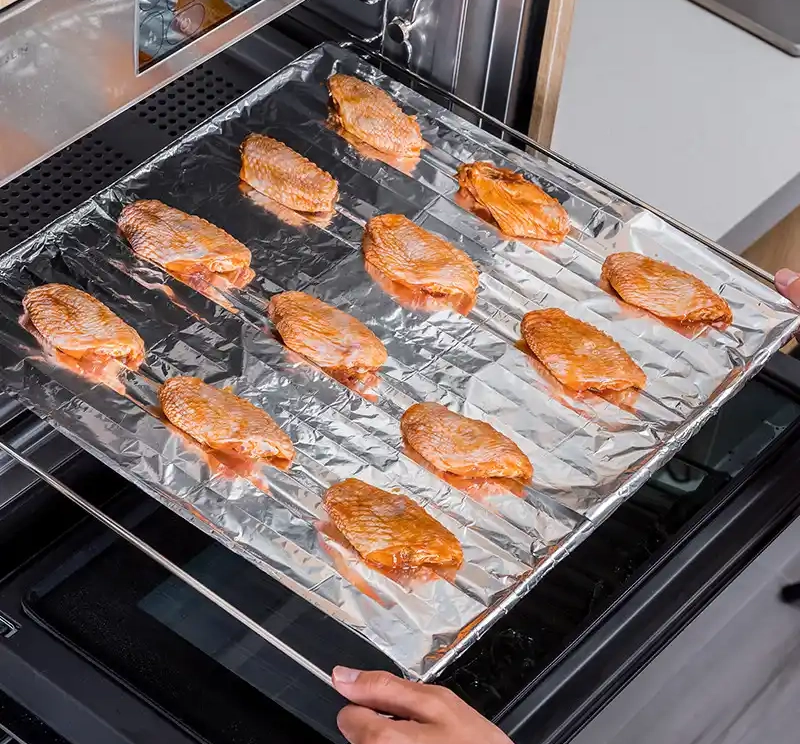
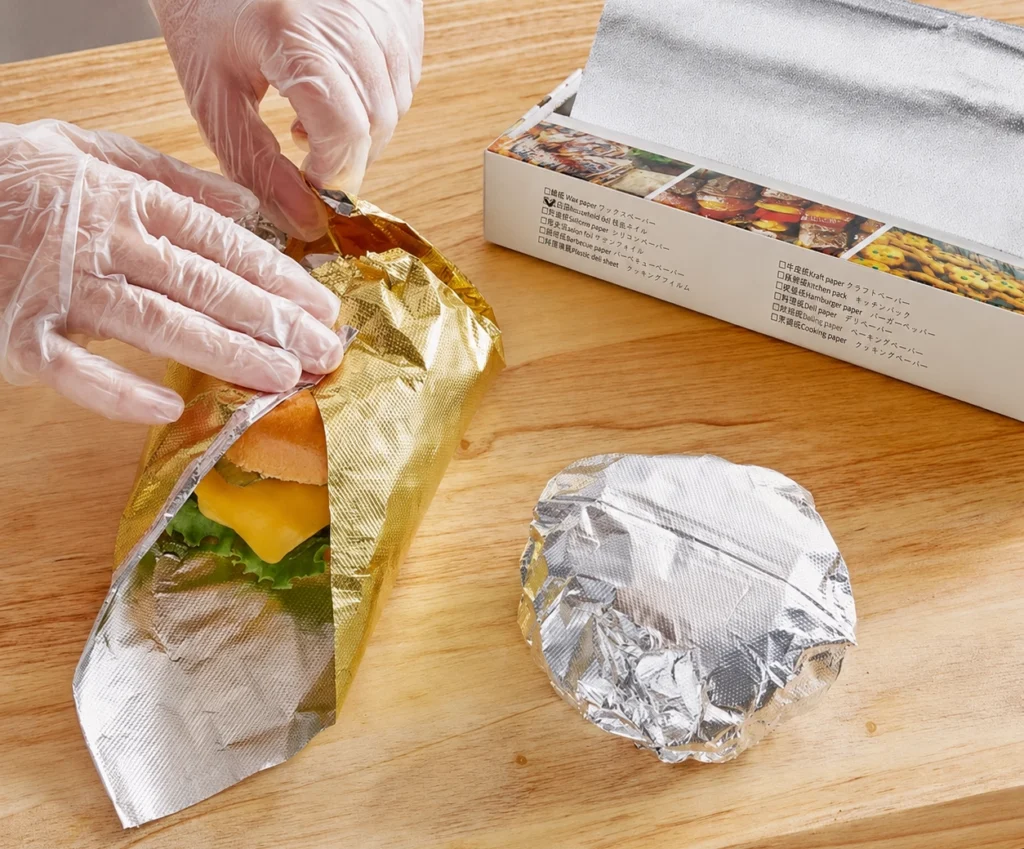
Aluminum foil works on a fundamentally different principle: as a metal layer, it’s a complete barrier to grease, moisture, and light, rather than a resistance-rated one. This is why foil-wrapped food service items are commonly marketed as oven-safe and freezer-safe, and why foil is the standard choice when heat retention matters — the metal reflects heat back toward the food rather than letting it escape, which paper simply can’t do
Standard Foil Gauge for Food Service Wrap
Food service interfolded pop-up foil sheets are commonly sold in the 50–55 gauge range, in standard sizes suited to burgers, sandwiches, hot dogs, and similar items. Compared to deli paper, foil is generally more puncture-resistant for hot, heavy, or moist items, but it’s harder to print with detailed branding, and it doesn’t offer the compostable positioning that fluorine-free deli paper can.
How the Folding Machine Handles Each Material
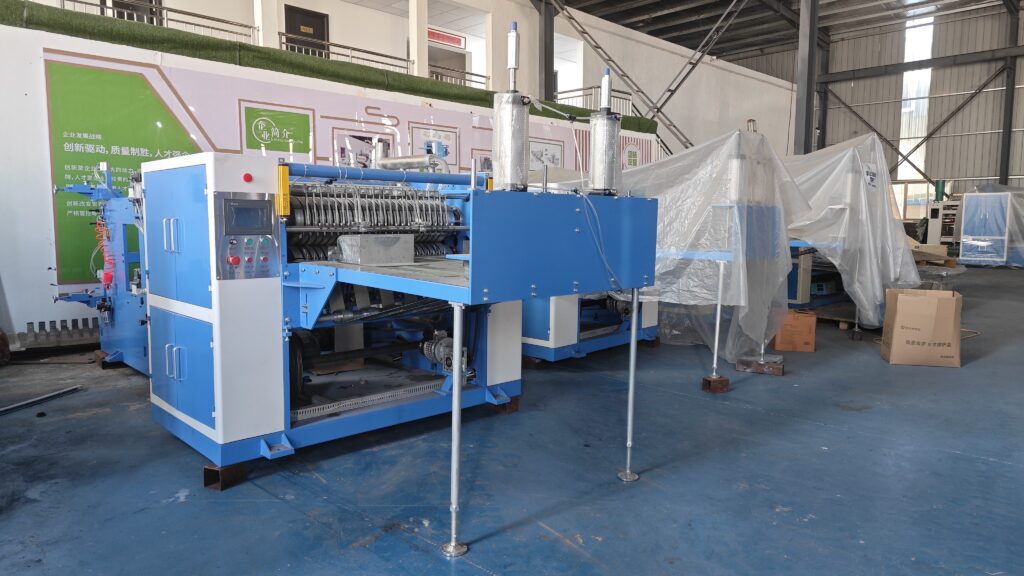
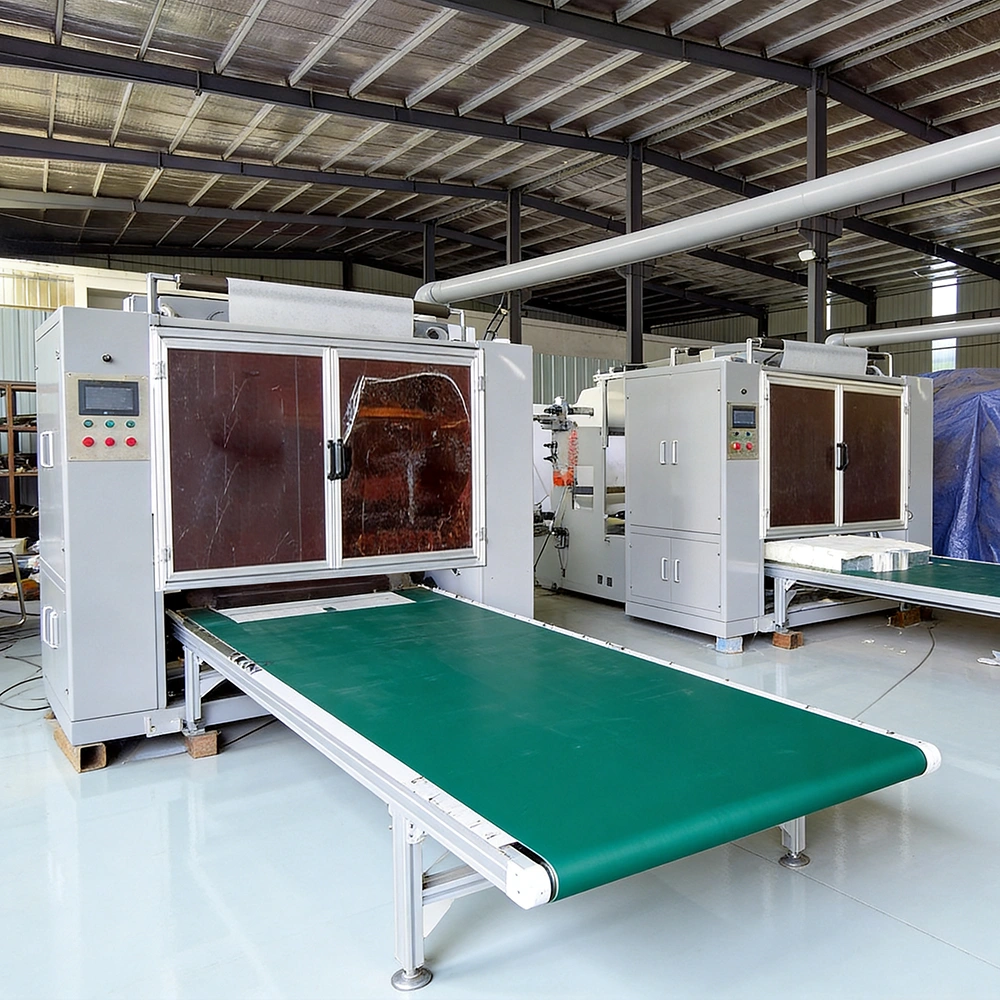
Handling these two materials on a folding line isn’t interchangeable, and each one presents its own distinct challenge rather than one material simply being harder to fold than the other. Aluminum foil has no elasticity, so excess tension at a fold edge can turn what should be a crease into a tear, and thinner gauges are especially prone to pinhole defects if tension isn’t tightly controlled. Wax paper presents a different kind of problem: its slippery surface makes it difficult to hold steady and align accurately through the folding process, which is a common source of misfeeds and inconsistent folds on standard equipment. ZXJ’s wax paper folding machine addresses this challenge and is protected by a Chinese invention patent; a fully automatic production line built on this technology is currently in testing and will be released soon.

Deli Paper vs Aluminum Foil: A Quick Decision Guide
- High-grease, high-heat items like fried chicken: either high-Kit-rated deli paper or foil can work, depending on whether branding or heat retention matters more
- Printed branding matters, grease level is moderate: deli paper is usually the better fit
- Heat retention or freezer-to-oven use matters: aluminum foil is the better fit
- Compostable/sustainability positioning is a priority: fluorine-free deli paper fits better than foil
FAQ
Q1: What is an automatic food packaging line for interfolded deli paper?
It’s an integrated workflow that converts rolls into interfolded pop-up sheets, batches accurately, and connects to boxing/cartoning for retail-ready output.
Q2: Can interfolded deli paper production be semi-automatic first?
Yes. Many plants start with stable converting + controlled batching, then add boxing/cartoning automation after output stabilizes and demand grows.
Q3: Why does downstream automation fail in pop-up products?
Most failures are caused by inconsistent sheet length, unstable interfold overlap, or count drift—downstream equipment can’t compensate for inconsistent upstream output.
Q4: How do I scale output without losing dispensing quality?
Scale through column/lane strategy and stable process windows, then match downstream packing speed with buffers between modules.
Build Your Interfolded Deli Paper Production Line
📩 Get a Quote / Contact Us
for machine specifications, video demonstrations, and a detailed quotation.
WhatsApp: +86 158-9610-9075
Email: paul@zxjmachinery.com
For detailed specifications and model options, visit our
🔗Interfolded Deli Paper Production Line
🔗Pop-Up Wax Paper Folding Machine Process & Patent-Protected Design