Two machines can share almost identical spec sheets and still perform very differently on your factory floor. Before you commit to a supplier, it helps to know which variables actually change your output quality and total cost of ownership — not just the numbers on a datasheet. This guide walks through the factors that matter most when evaluating an oil blotting paper machine, so you can compare quotes on more than price alone.
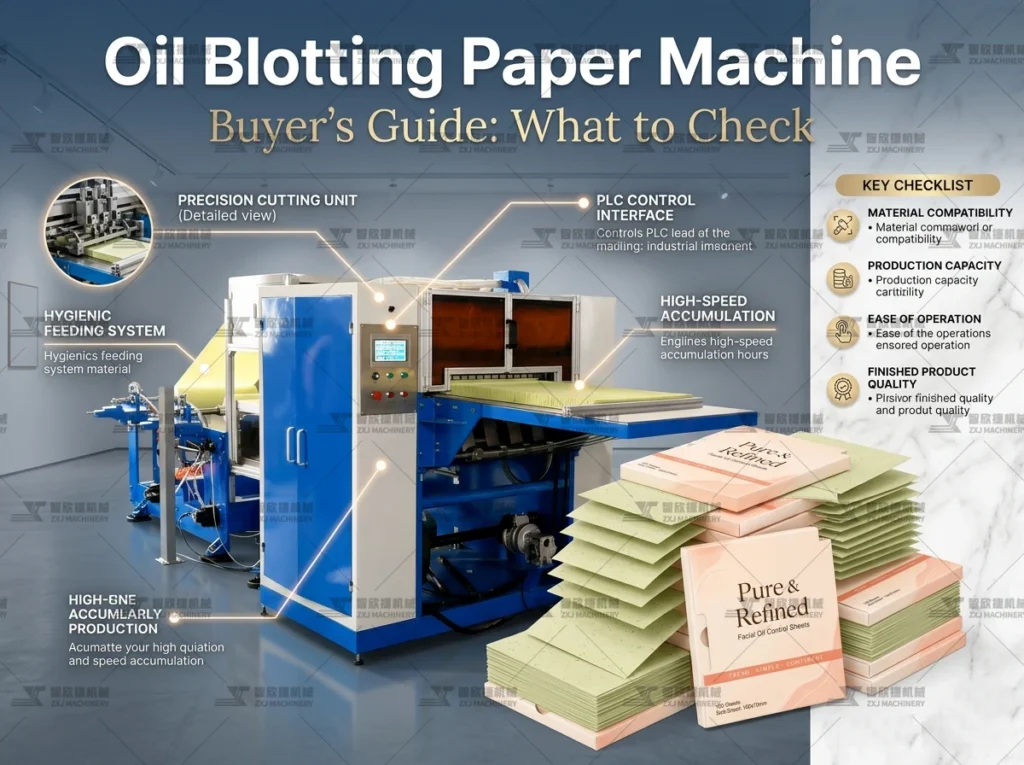
How to Choose an Oil Blotting Paper Machine: Key Factors
Before requesting quotes, narrow down what you actually need to evaluate. These six factors decide whether a machine fits your production line — or ends up sitting idle after the first month.
Related equipment is covered in our personal care products production solutions.
| Factor | Why It Matters |
| Raw material compatibility | Wrong GSM range or roll size causes jams, wrinkling, or wasted trial rolls |
| Output capacity | Speed must match your order volume, not just the headline max spec |
| Folding precision | Inconsistent fold length affects packaging fit and customer complaints |
| Format flexibility | Pop-up, sheet, notebook, and puff formats may need different tooling |
| Control system & spare parts | Determines downtime risk and how fast you can get replacement parts |
| After-sales support | Response time and access to technical support once the machine ships |
Oil Blotting Paper Machine Buyer’s Guide: Raw Material Compatibility
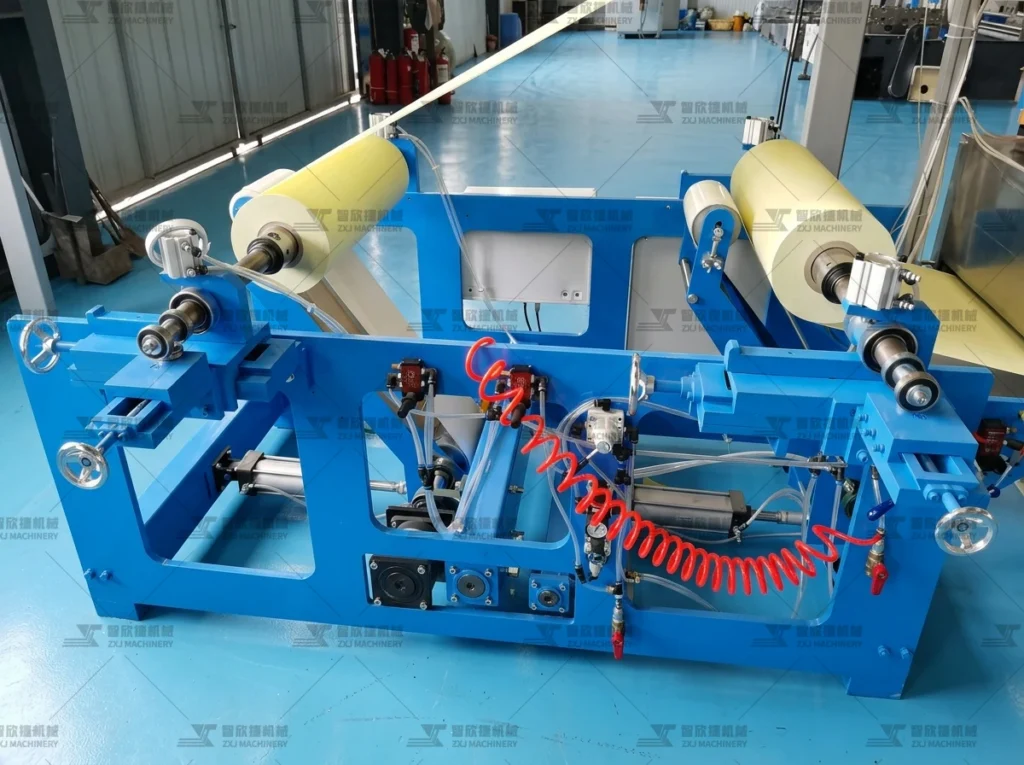
Oil-absorbing base paper varies by supplier — basis weight (GSM), paper core inner diameter, and roll diameter all differ. A machine tuned for one paper grade may skip, wrinkle, or misfeed on another. Before ordering, confirm the machine’s supported GSM range, core ID, and maximum roll diameter, and, where possible, send a sample roll for a trial run rather than relying on a spec sheet alone. For reference, one production-ready model runs 16–20 gsm base paper on a 76mm (3″) core — see the full parameter breakdown for a worked example.
How to Choose an Oil Blotting Paper Machine for Your Output Capacity
Rated speed is usually given as sheets per minute, but what matters is sustained output under your actual paper and humidity conditions — not the theoretical maximum. Ask for the recommended operating speed alongside the design maximum, and clarify what happens to output when static or paper quality varies, since some machines lose more speed than others under the same conditions. Matching capacity to your monthly order volume, with headroom for growth, avoids both an idle oversized line and a bottlenecked undersized one.
Oil Blotting Paper Machine Buyer’s Guide: Format Flexibility
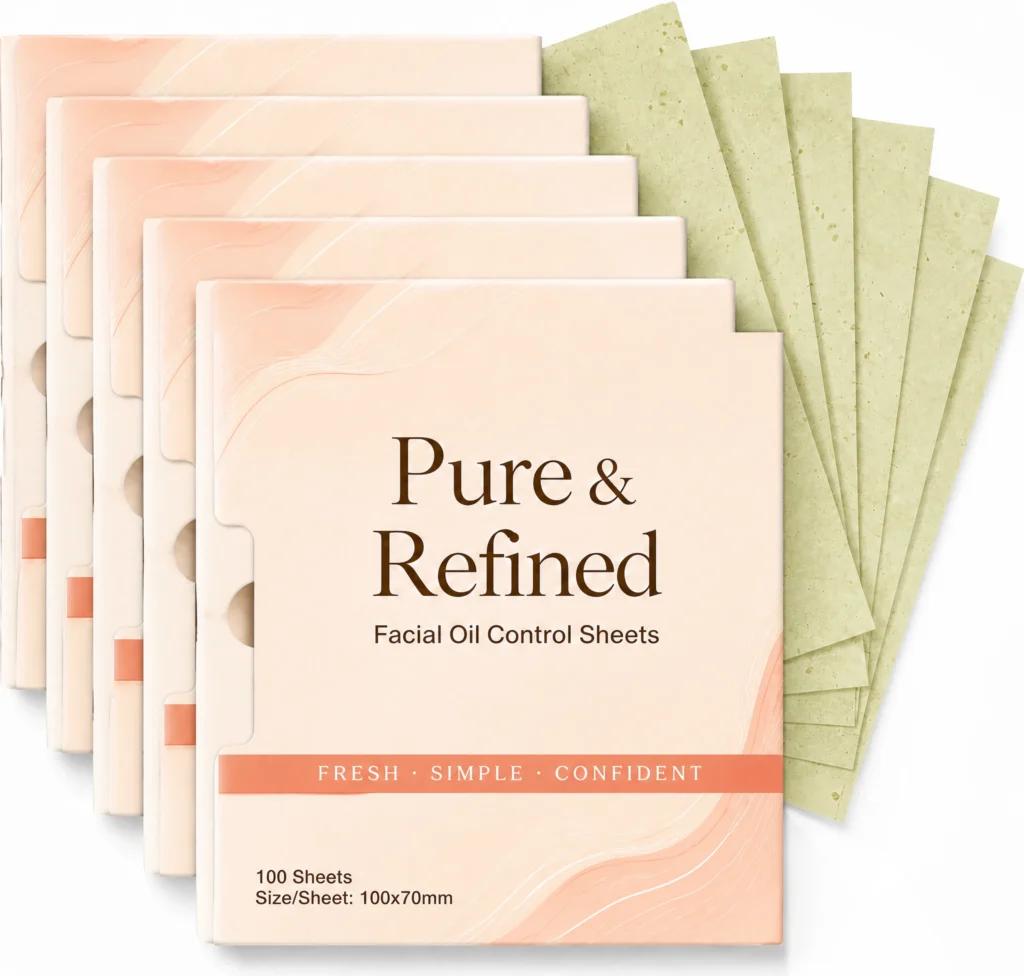
The finished product isn’t always the same. Depending on the market you supply, you may need pop-up (interfold), flat sheet, notebook-style, or puff-style oil blotting paper — and not every machine handles more than one format without retooling. Clarify with your supplier upfront which format(s) the machine is built for, and what it costs to add or switch a format later, before you’re locked into a single output type.
Oil Blotting Paper Machine Buyer’s Guide: Control System & After-Sales
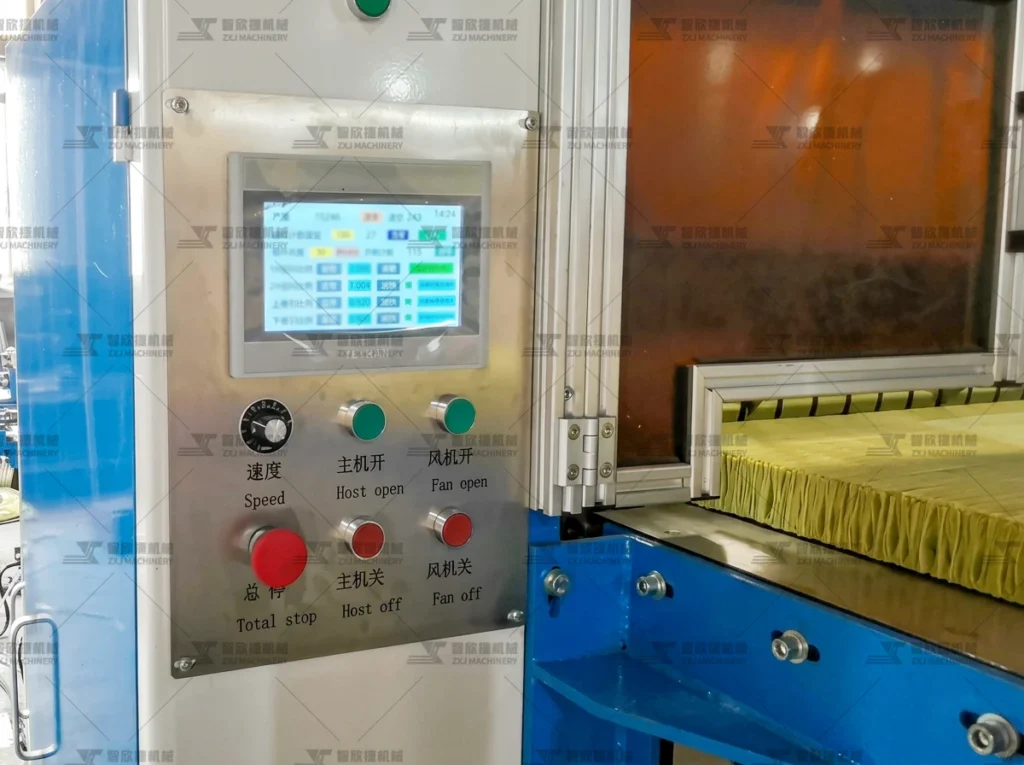
PLC brand and component sourcing affect both upfront cost and how easily you can get support and spare parts later. Domestic Chinese PLC brands (Delta, Xinje, Invt) are common on mid-range machines and keep costs down; imported control systems cost more but may suit buyers who already standardize on a specific brand across their plant. Either way, ask what’s actually a wearing part — cutting blades, proximity switches, sync belts — and how fast your supplier can ship replacements.
Oil Blotting Paper Machine Buyer’s Guide: Get a Quote
Use this checklist in your next supplier conversation:
| Checklist Item | Confirmed? |
| GSM range and roll/core size match your paper supply | |
| Recommended vs. maximum operating speed clarified | |
| Format(s) needed (pop-up, sheet, notebook, puff) confirmed | |
| Control system brand and spare-parts lead time confirmed | |
| After-sales support and warranty terms in writing |
for machine specifications, video demonstrations, and a detailed quotation.
WhatsApp: +86 158-9610-9075
Email: paul@zxjmachinery.com