

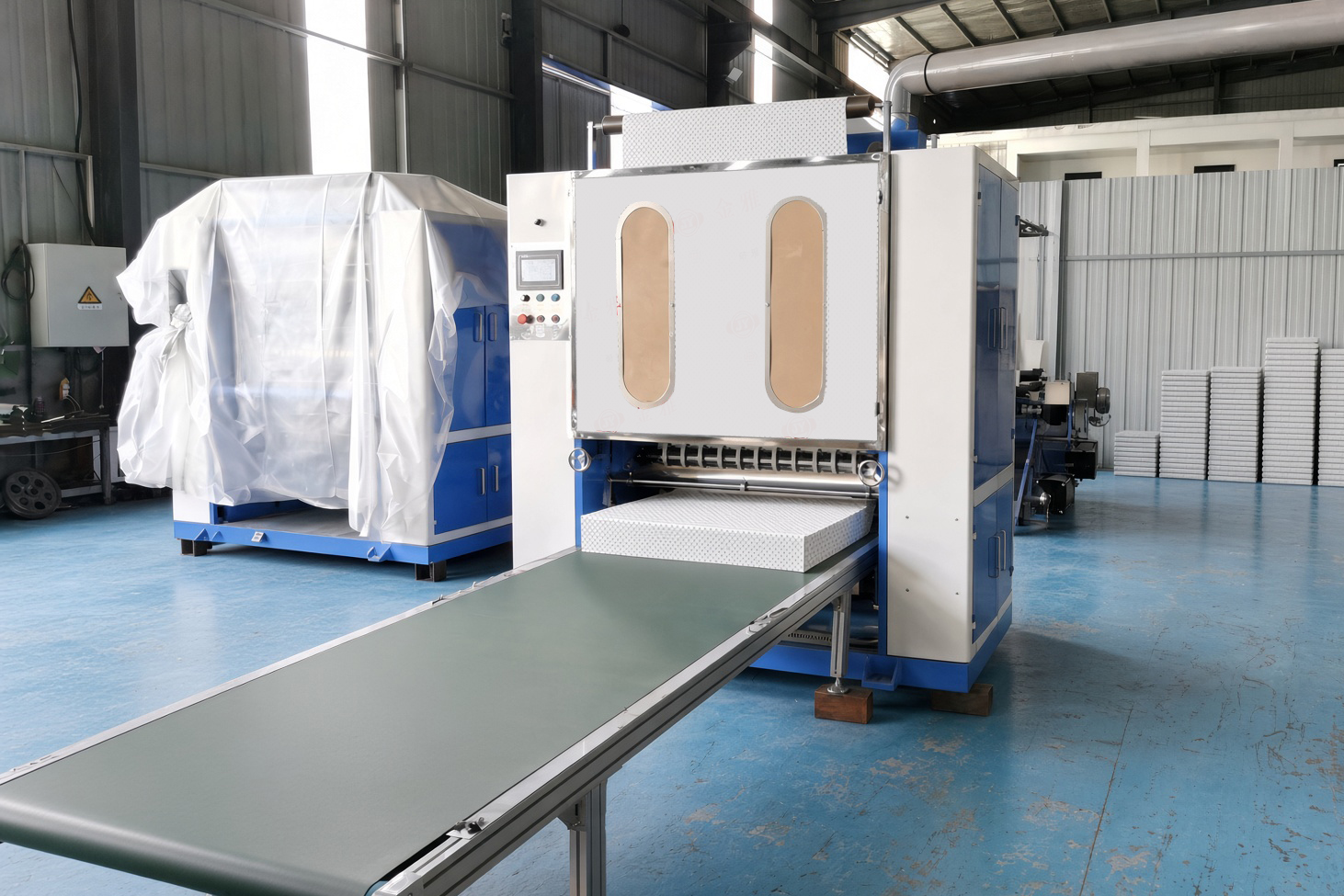
Buying a perm paper folding machine is not like buying a generic paper converter. Perm paper—often sold in salons as perming paper or end papers for hair—is thin, absorbent, and light (typically 13–26 gsm). Because salons pull these sheets rapidly during chemical hair treatments, every finished sheet must pop up cleanly, one at a time, without tearing or double-pulling.
This guide covers what to evaluate before talking to machine manufacturers, key mechanical criteria, and how to test equipment on your actual material before issuing a purchase order. For an engineering overview of our converting equipment, visit our perm paper folding machine overview.
Perm Paper Folding Machine Buyer’s Guide: Define Your Product First
The right machine configuration depends entirely on the finished consumable you plan to supply. Before comparing frame designs or motor specs, settle these four product parameters:
Related equipment is covered in our personal care production line solutions.
| Decision | Options to Consider | Why It Matters |
|---|---|---|
| Paper Type | Cold perm paper, digital / hot perm paper, PE-laminated or mesh specialty paper | Chemical resistance and wet strength vary by grade, which changes how the web feeds under speed |
| Paper Weight | Lightweight absorbent paper, 13–26 gsm | Ultra-light paper requires sensitive web tension to prevent necking and breakage |
| Finished Sheet Size | 2.5″ × 4″ (approx. 63 × 100 mm) standard, plus Jumbo options | Governs rotary slitting width and folding cylinder geometry |
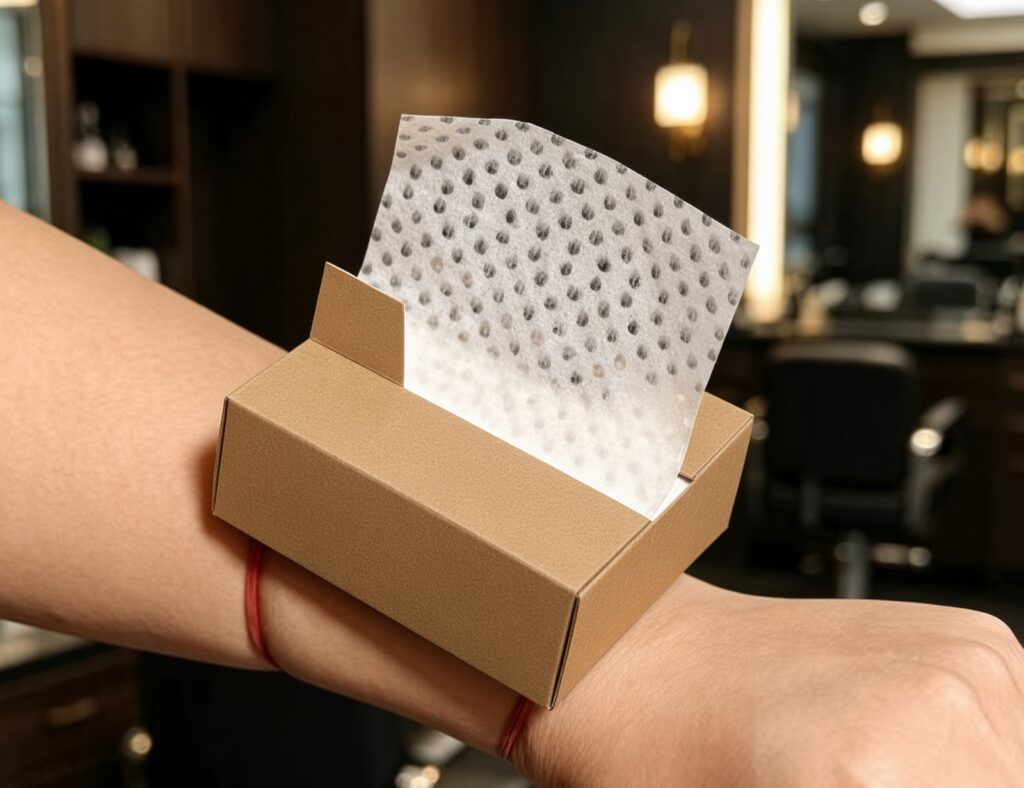
| Fold Format | Interfolded V-fold (pop-up) or flat packet | Controls single-sheet dispensing from standard countertop or wrist dispensers |
While 2.5″ × 4″ remains the salon industry standard, many converters also produce larger “jumbo” end wraps for long-hair treatments. If you plan to supply both, confirm cylinder changeover parts with your supplier early.
How to Choose a Perm Paper Folding Machine: Key Selection Criteria
Use this technical matrix to evaluate machine suppliers on identical terms:
| Criterion | Why It Matters | What to Ask the Supplier |
|---|---|---|
| Material Range | 13–26 gsm tissue behaves differently from packaging grades | Which exact gsm range is certified, and has the unit run porous end-paper grades? |
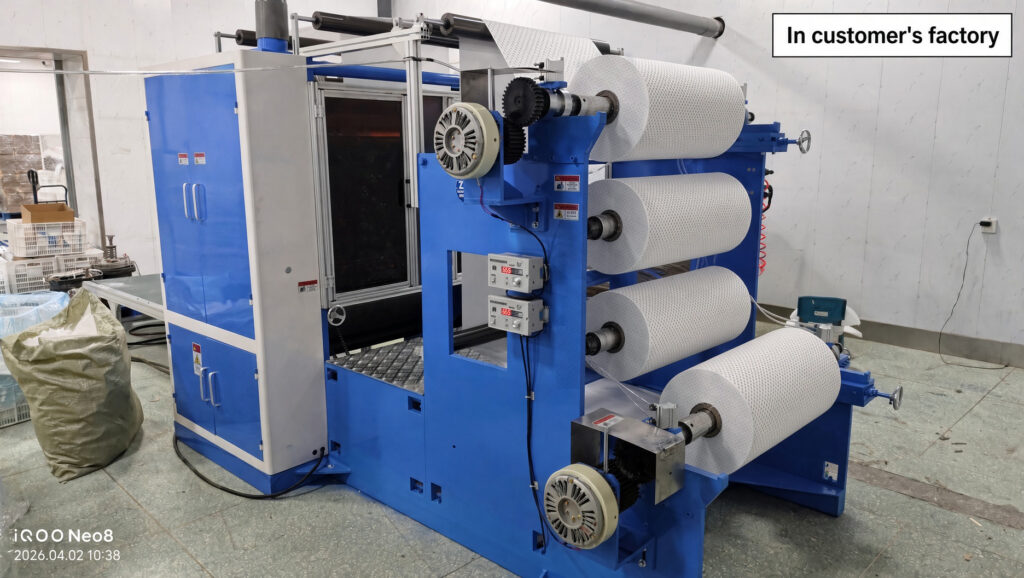
| Tension Control | Light tissue stretches and wrinkles under fluctuating pull | Does the machine use automatic tension control with load-cell feedback or magnetic particle braking? |
| Fold Accuracy | Inconsistent folds cause misfeeds and jamming in salon dispensers | Can the supplier demonstrate clean interfolding on your exact target paper? |
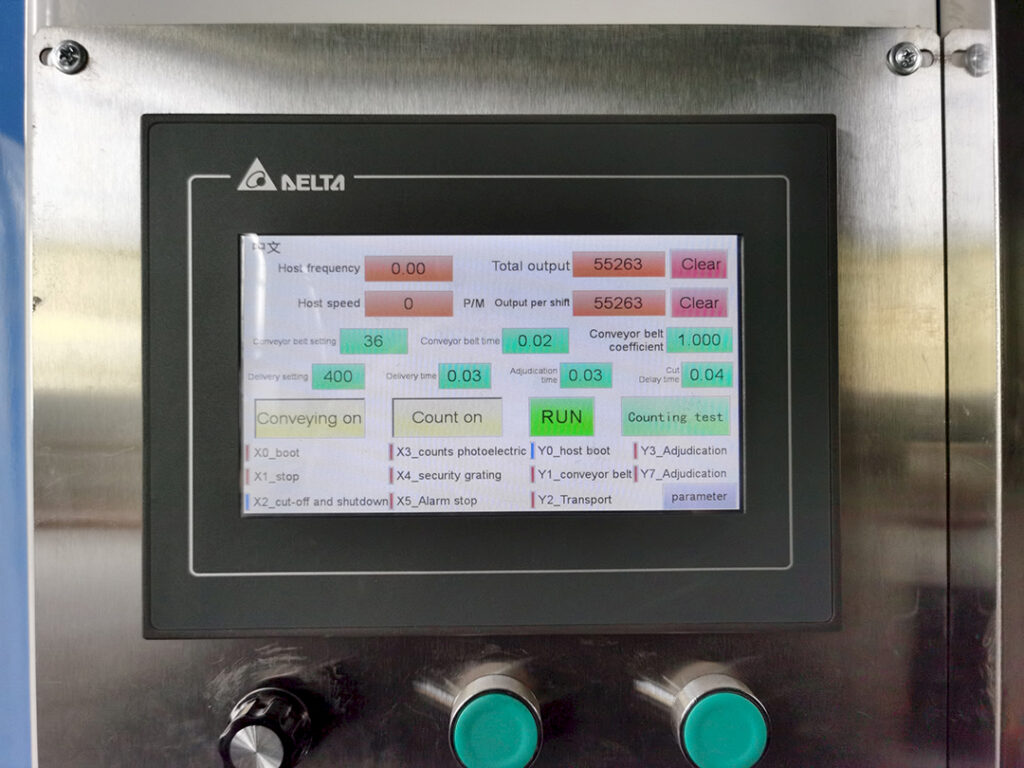
| Batch Counting | Box counts (typically 500 or 1,000 sheets) must match packaging lines | Is optical or pneumatic batch marking integrated into the delivery table? |
| Operator Control | Intuitive HMI reduces operator error during roll splices | Does the PLC touchscreen support recipe storage for different roll widths and gsm grades? |
| Production Speed | Dictates output capacity per 8-hour shift | What is the real-world operational speed (sheets/min) on 16 gsm paper, not theoretical max? |
| Size Changeover | Frequent dimension or fold adjustments reduce uptime | What tooling changes are required between standard and jumbo sheet widths? |
Why Thin Paper Matters When You Choose a Perm Paper Folding Machine
At 13–26 gsm, perming paper behaves much more like delicate facial tissue than heavy greaseproof paper. It is prone to static cling, web wandering, and edge tearing under sudden acceleration. This is why closed-loop tension regulation and precision folding vacuum matter far more than raw machine horsepower.
Perm Paper Folding Machine Sample Test Checklist
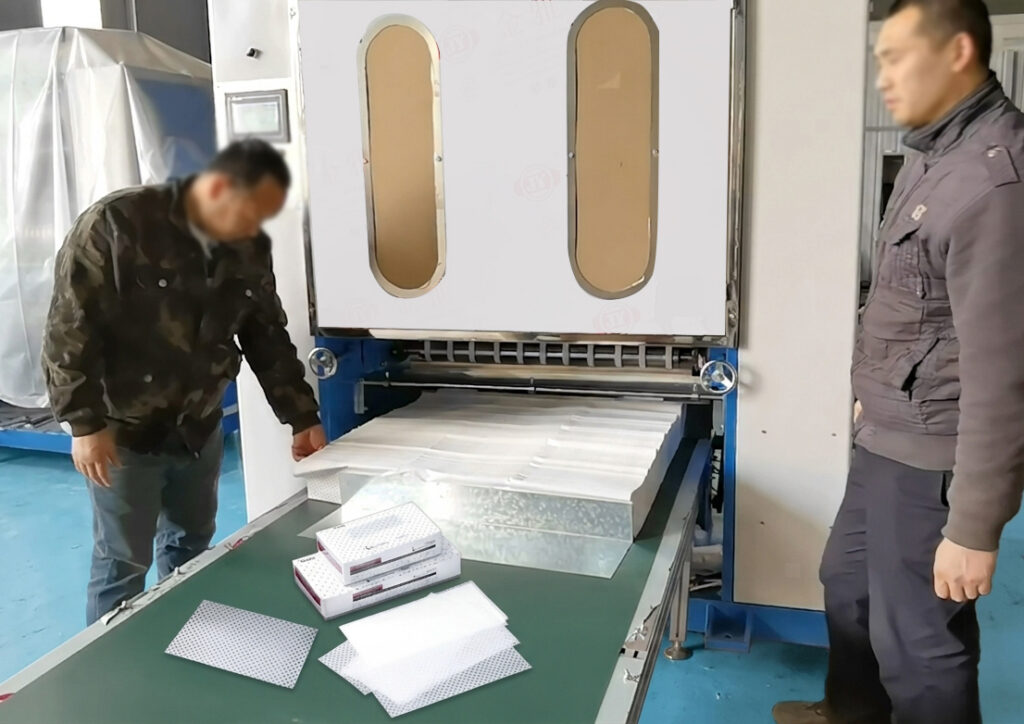
Never finalize a machinery contract based on catalog photos or demo material. Ship a roll of your intended raw paper to the manufacturer and verify this operational checklist:
- Web feeds flat without diagonal wrinkles across the folding deck
- Finished sheets fold cleanly with parallel, crisp edges
- Sheets pop up reliably one-by-one from a dispensing box with zero double-pulls
- Sheet dimensions hold tolerance (within ±1 mm on a 2.5″ × 4″ cut)
- Count markers or tab inserts accurately group 500-sheet packs
- Machine maintains stable tension through roll diameter depletion (unwind core to end)
- Supplier provides uncut video documentation of a continuous 30-minute test run
(Image: Interfolded 2.5″ x 4″ pop-up perm paper sheets produced during a perm paper folding machine test run)
Who Should Buy a Perm Paper Folding Machine: Manufacturer Profiles
Investing in a dedicated perm paper converting line is typically viable for three buyer groups:
- Salon consumable brands & private-label converters: Companies seeking direct control over sheet counts, paper gsm, and custom branded dispenser boxes.
- Hygiene & personal care disposable manufacturers: Factories expanding from wet wipes or sanitary products into professional hair salon consumables.
- Food-wrap & tissue converters: Existing converters that already understand light-paper web handling and want to diversify into high-margin salon products.
Ready to Choose a Perm Paper Folding Machine? Request a Factory Quote
Whether you are launching a new private-label salon line or replacing older, low-speed equipment, send us your raw paper gsm, desired sheet dimensions, and daily production target. Our engineering team will calculate output rates and arrange material testing at our facility.
Contact our technical sales team at paul@zxjmachinery.com or submit an inquiry through our contact page.
for machine specifications, video demonstrations, and a detailed quotation.
WhatsApp: +86 158-9610-9075 Wechat:aaa1888
Email: paul@zxjmachinery.com